
New Leaf
how I lost my friend, Betty

I moved to Buffalo, New York in mid-2020, despite my mother’s pleading “NOOOOOO—”.
I had been living in New York City for five years, hating it for four. My decent but demeaning job at a production company had gone caput, and on the pandemic’s fourth official day in America, I witnessed two grown men slam each other against the plexiglass of the Fresh n’ Save, for a pound of ground beef. I was, in short, a coyote chewing on the bars of her mental prison.
My partner at the time was from Buffalo’s lake-laced outskirts, and so we loaded up his room, and my beanie babies, and drove five hours northwest. We settled in an old house thirty minutes down the road from his parents. A week or so following the move, I took a job at a nursing home. And that is where I met Betty.
So this is my ode to Buffalo: The city that makes me Pavlovian spit whenever I see a basket of wings or Bills merchandise. And to Betty, whose memory makes me better.
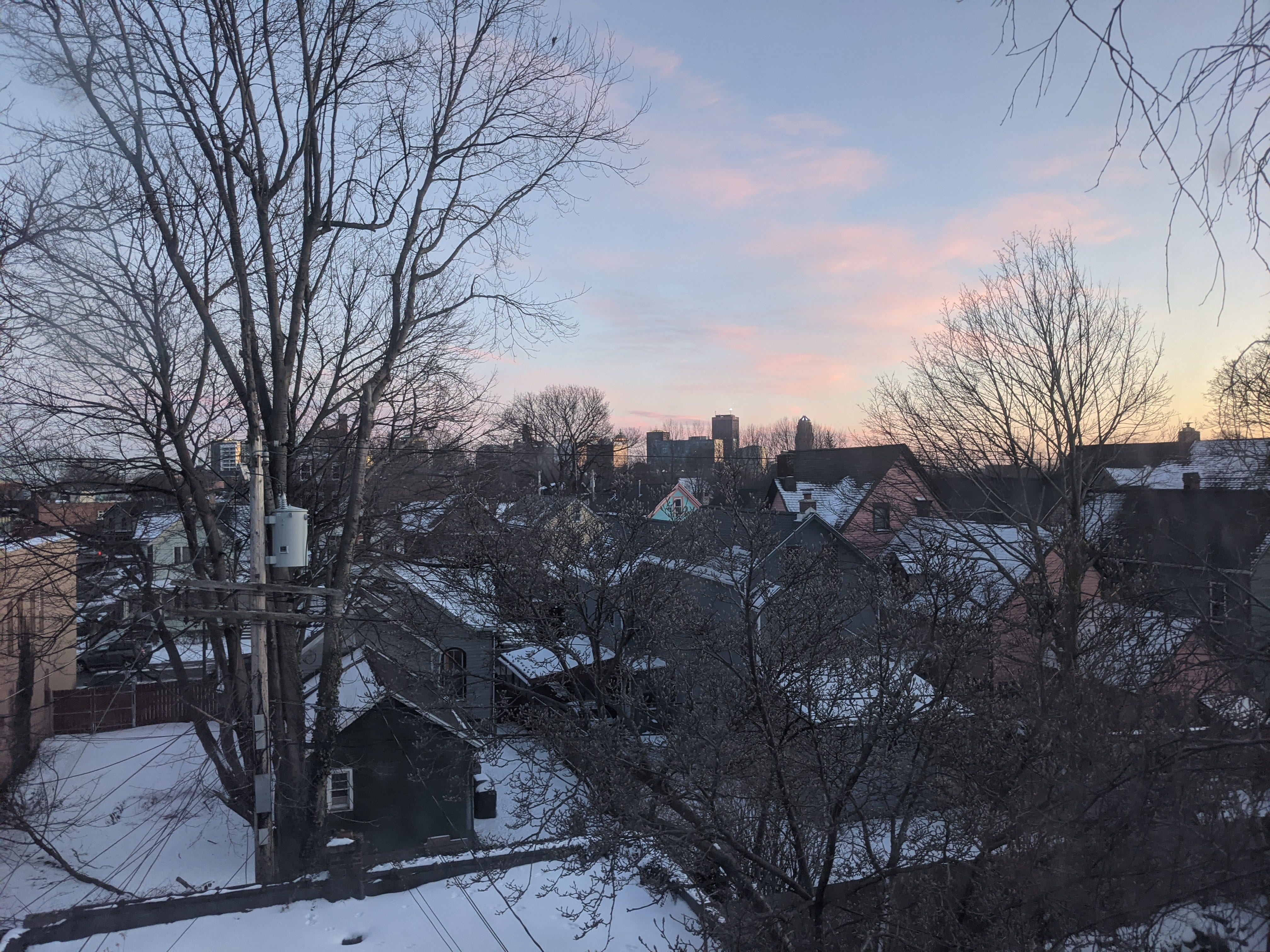
I lived here for a year. One year.
I came in July, which goes against every piece of moving advice if you’re looking for it.
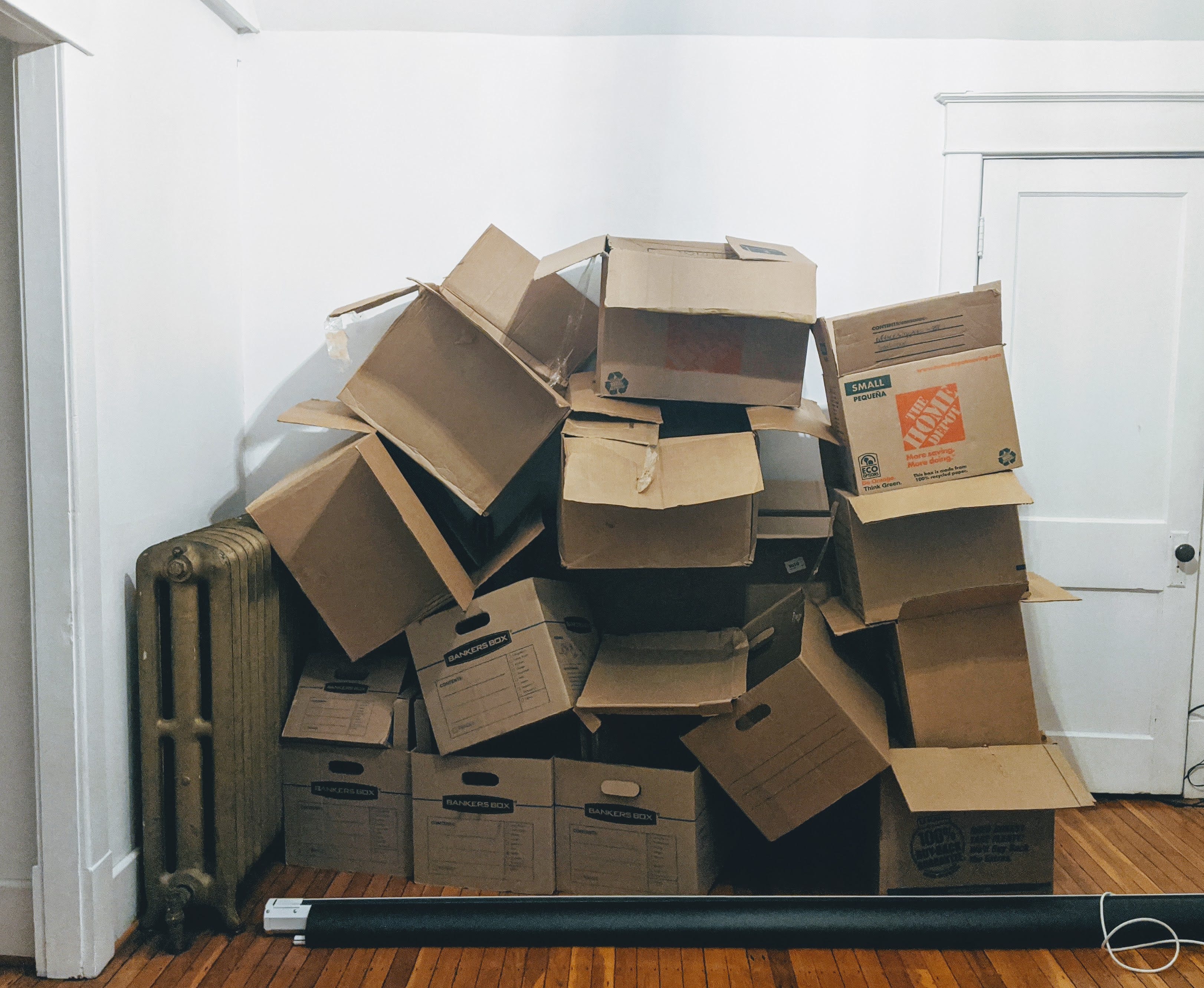
It was the kind of hot that makes you swim, both through the air and inside yourself. This was helped none by the hollowed hardwood walls of our new-old house, three stories suspended in the thick summer air, with only our tired knees and backs to carry the weight of every trunk, pack, and over-stuffed cardboard box.
It was a long day.
Steve and I spent that first night on a blanket rolled out on the sloping floor. That first night in a new home can tell you a lot: If the windows whistle, if the neighbor will be friend or foe, if you’ve made a mistake.
That night, the air didn’t move. In between towers of IKEA bags and half-assembled furniture, Steve slept like a lion after a hunt. My lungs were still clenched, still choking on the air’s invisible water. So I studied the divots in the high ceiling. What are they trying to spell out, I wondered, and decided it was a blessing.
The house was crooked, like an old man bent over a river, unable to drink. It swayed with even the shyest of winds, and Steve had a habit of slamming doors. When he did, the whole floor would waver beneath us, and groan from every direction. Towards the end, I was sure that one day I’d come home to find that the kitchen had slid off like icing from a hot cake: Where the fridge once was, only open air.
There were birds in the attic — squirrels, too, that kept us up all winter long with their digging and their birthing and their dying. By March, they were all gone, replaced by several hundred horse-sized flies. How we missed the digging then.
There was also a marvelous sugar maple tree full of chartreuse leaves that swayed by the window behind the bookcase. It sounded like water when it moved, washed the floor in glittering green. I sat in its shade once and read a book, cover to cover. By then, I felt that the tree and I had really gotten to know each other. I named her Harriet, and started patting her on the trunk before leaving for work in those butter-yellow hours of northern dawn.
On the first day of fall, the city chopped her down. I ran through the lawn without shoes, in seven year old lingerie, screaming in broken Spanish lo estás matando, por favor, parar. They were killing a perfectly good woman. And they didn’t care.
When they were done, I sat in the cropped grass by Harriet’s stump. I cried, filed a complaint, and cried again when it didn’t bring her back. Steve said she had been sick, pointed to the red circles in her pale wood. This meant nothing to me. They should have let her fall on the house then, I thought, but didn’t say.
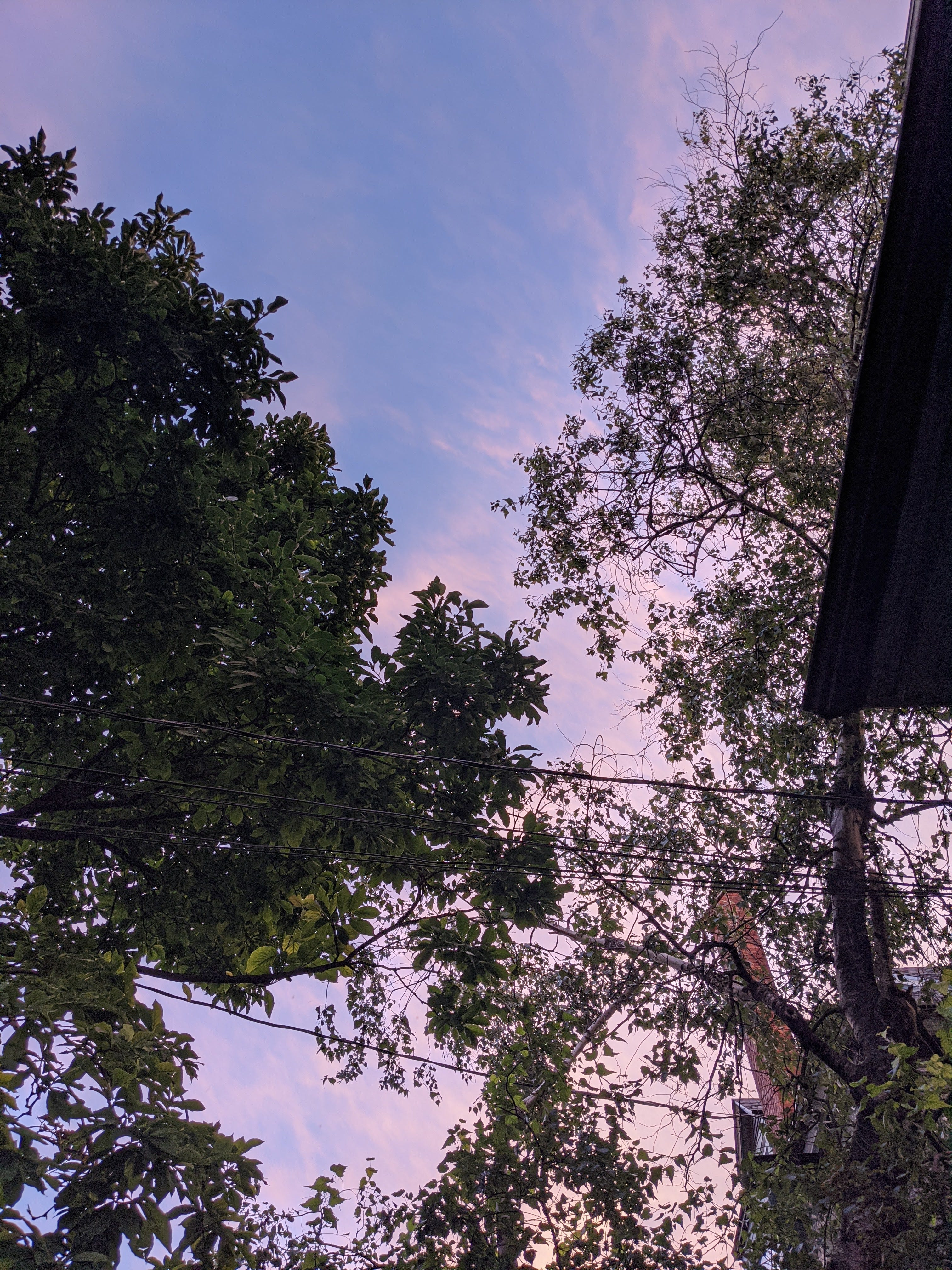
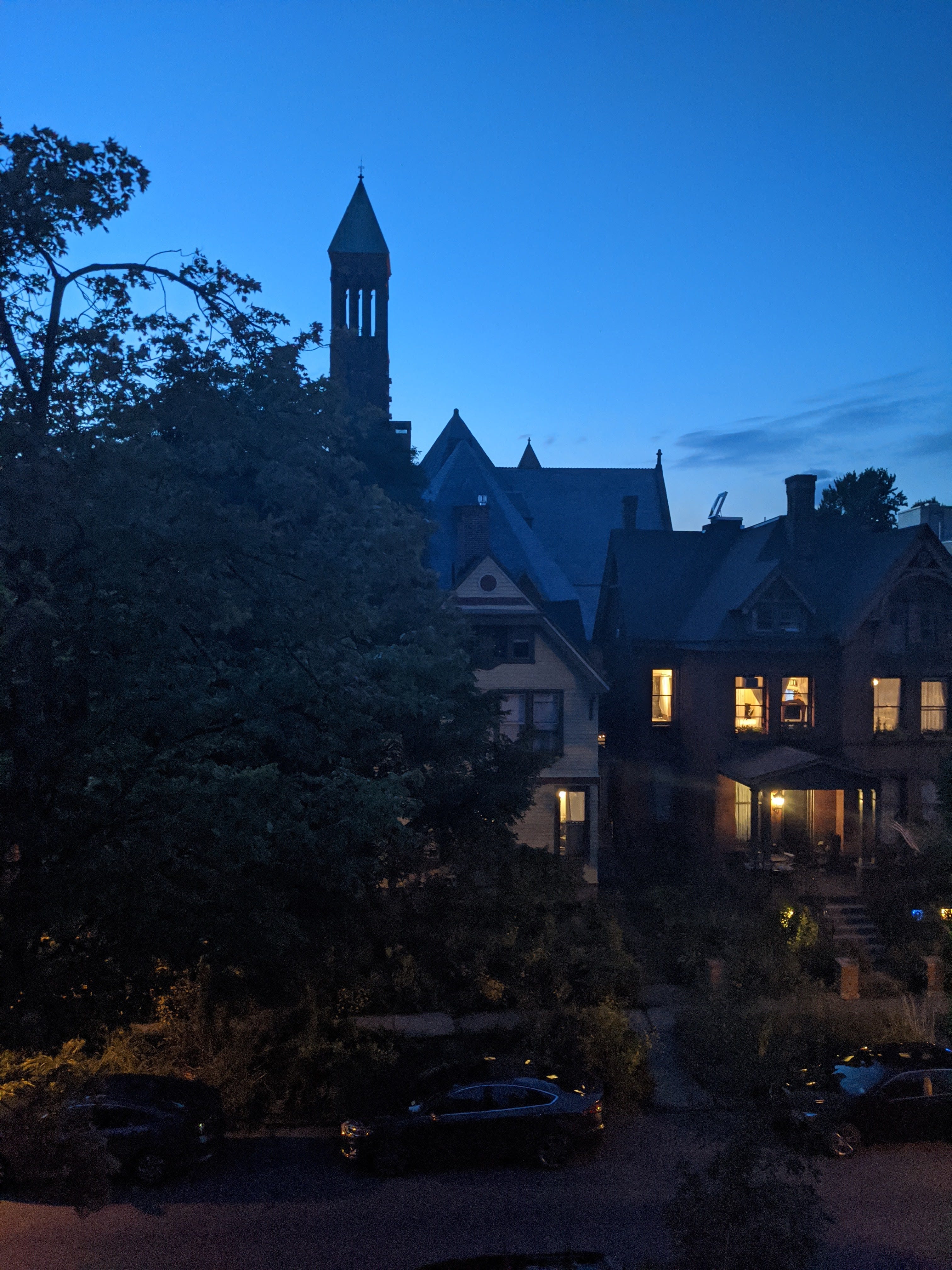
With this new unadulterated view of the neighborhood, we could see the church’s crooked steeple pressed against a white neck of sky, unveiling an early moon. Steve said something about getting dinner with his parents. It dawned on me that my own family was many thousands of miles away — so was life in New York, and so was Harriet. As lonely autumn turned belly up to inevitable winter, I felt the bars of that familiar prison begin to squeeze what little life was left.
Steve and I, at this point, were sleeping in separate bedrooms.
He didn’t love me anymore. Maybe never had. But that isn’t Buffalo’s fault, really. Some part of him always knew. Buffalo just said it for him.
It’s a fine city. It takes a lot for me to say that because I’ve somewhat come to resent it. It’s too party-hardy to be outdated, too boomer to be trendy. It is tiny, and large, incestuous, madly in love with itself, and simultaneously claustrophobic and spookily empty. In a moment of rage, I referred to it as “a desolate Canadian bus stop”, which isn’t totally inaccurate, but maybe it is unfair. Either way, “it’s a fine city” is the best I can do.
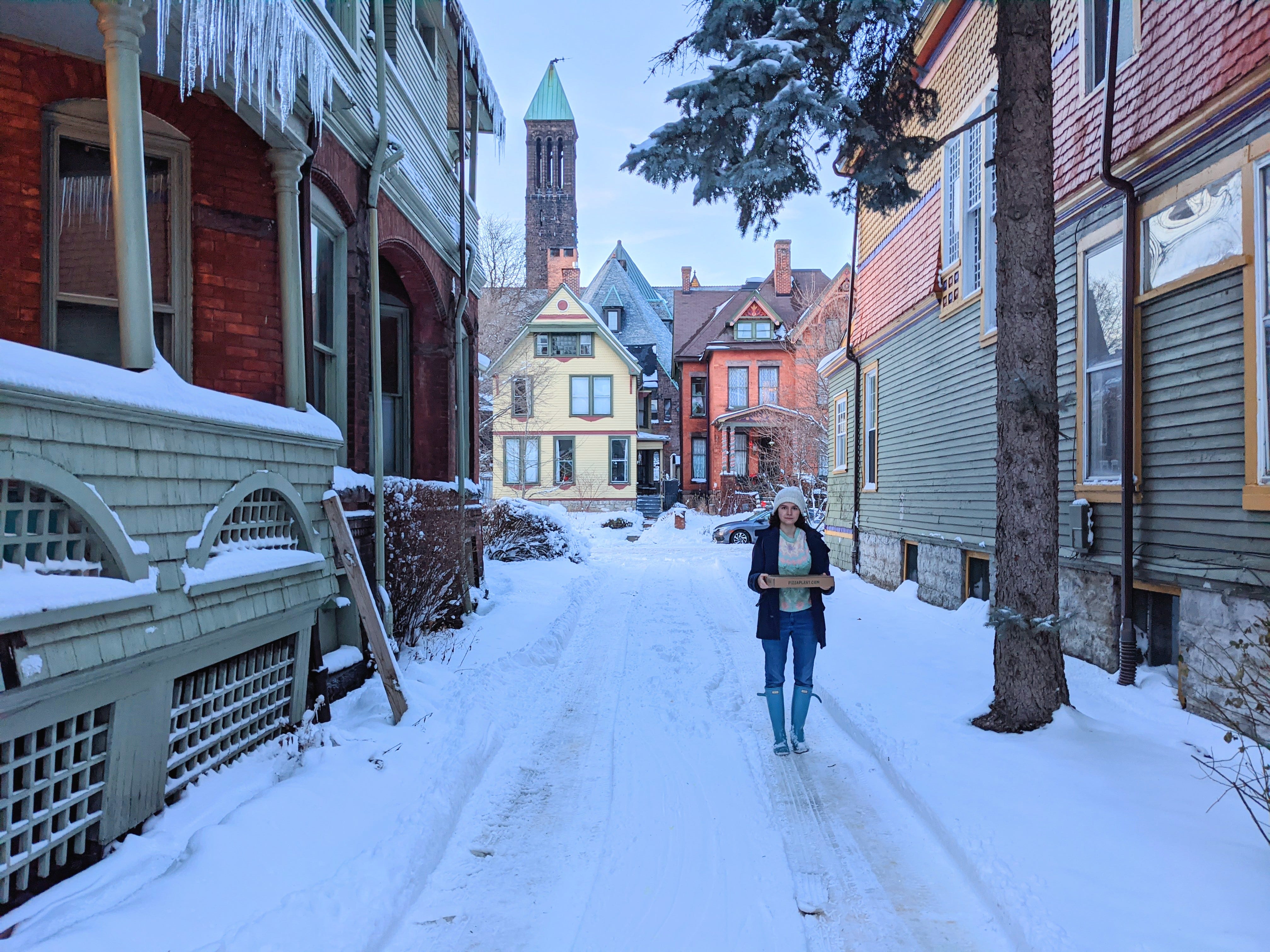
Most of my views on Buffalonians themselves came from Aging Wood: An indistinguishable brick building tucked between a sleepy cul-de-sac and a river, brown, freckled with deer.
I started working at the assisted living facility in September of the year that moved quickly and also not at all, well-suited for the people inside.
They had all cropped up here, in houses like mine, on streets like this. They had all gone to the same high-school, years apart, and married into each other’s families. They were deeply American — which is to say, they held distinguished, xenophobic views of the Irish and Italians but held names like McLaughlin and Rossi. They were also industrious: Even now, ten years into retirement, many of them did not know how to sit still.
Here I would find people I connected to keenly, despite the 70+ year age difference. Unlike my own grandparents — who had been rather unforthcoming with details of their lives prior to 1990 — these folks were hungry to impart their wisdom.
“If you ever get the chance to go to Rome, visit Antonia’s, and tell her ‘Tony still loves ya’.”
“Gettin’ old ain’t for the faint of heart.” (Said immediately after taking thirteen pills in one gulp.)
“Don’t have children — it will ruin your very good bladder.”
It doesn’t get better than that.
The residents also talked about The End with fantastic nonchalance. Their relationship with Death seemed similar to our own relationship with car insurance: The bill always comes. Until then, might as well roll down the window and enjoy the ride.
It was a strange place to be at twenty-three, and then twenty-four.
And this is where I met Betty — or, more truthfully, where Betty met me.
Art class was over, and I was washing a fistful of paintbrushes. My boss was leaning over the sink, not helping, and having a melt down — something about her kid and his new pocket knife and how the school did not like his new pocket knife. I was thinking about Steve, and how we might divvy up the succulents.
I turned and there she was, in a pink velvet jumpsuit and cat-eye reading glasses.
What’s your name?
I told her.
I like the way you do things.
I like you too, Betty.
She spoke like a cartoon cowboy. She had those magical whistling “S”s. Her eyes were glacial blue, but always smiling. And she had a habit of tipping an invisible brim to an invisible hat every time she made a joke. How could I not like Betty?
She was a girl scout leader for fifty years (she liked to remind me) and collected everything from ribbons to wrappers to streetside wildflowers. During a brisk, mid-October walk, donned in three fleece layers and a yellow rain jacket, she pointed out leaves she wanted to take home. It was my job to fetch them. Once, I slipped and tumbled down the embankment. For the rest of the afternoon, I walked around with a giant sludge stain on my ass.
She belly-laughed so hard, she fell back onto a bench and huffed on her inhaler.
Then she sighed and said she hadn’t been outside since May.
Feels good.
The wind tousled her gray hair like an old friend. It occurred to me that she had never left the state of New York, and therefore had been carved by this very wind. With every breeze, a little more Betty. She was right in her place.
Twenty minutes later, my shift ended. I clocked out, handed her our bag of collected leaves, and promised I’d see her tomorrow.
So long, kid. And thanks for everything. She said it as if she knew this was the last day we’d have together.
The facility received its first positive COVID test later that night. By the next morning, we were in full lockdown. The outbreak swept across all four halls, hitting every room harder than the last. We lost a lot of good people — residents, workers, friends.
No more art class. Now, my shifts were limited to standing in doorways in head-to-toe PPE, offering snacks or water or my distant, unpleasant company. Once, I played “Sea of Love” on my ukulele for a navy veteran, and he shut the door in my face. Then locked it.
Betty got a kick out of the whole thing.
You got any rum, Buzz?
No.
I’ll tip you if you’ve got any rum.
I don’t drink rum at work, Betty.
Mm. You sure you’re Irish?
She laughed at her own joke, then coughed on her own laugh. Her roommate rolled her eyes and dialed up the volume on Wheel of Fortune. Betty didn’t pay her any mind.
We’ve gotta get outside again. When it’s possible.
She inhaled, then rifled through our bag of leaves. She searched until she found it: One perfect, ripe, fat maple leaf. She stuck it under the lamp, tracing its terracotta veins from rib to apex with the tip of her finger.
I saw an owl out there last night. I’d like to get a feather — to match this.
She shook the leaf and it made a small sound, like a plashing.
A feather and a leaf. For me and you, right?
Which one do I get to be?
The leaf, of course! You kiddin’?
I watched Wheel of Fortune from the doorway until she fell asleep. By then, my shift had long ended. But I stayed, and watched her sleep for a little while. The leaf was in her lap.
At a nursing home, Death is a constant looming bird crowing its arrival at first light. We all see it out there on the eaves. We hear its heavy wings whooshing in the dark.
So-and-so didn’t sleep much last night. It’s a whisper, quiet as the flickering light over the living room.
We’re just waiting for her son to call.
It’s what we are here for. There’s no dread attached. It’s no terrible awful thing, not some unholy misfortune or unbelievable shock. We are the valet staff for Chyron, the lobby-boys in the final bed and breakfast. I like to think of it that way.
Betty died in December. I wish we had more time.
Spring covers Buffalo like a warm cotton sheet. Winter says you are the sole occupant of the northern hemisphere, and then neighbors pour out of their houses like fire ants, invigorated by the sun and the rain and the brimming of boats on the lake. You can’t get away. Everything is suddenly very, very alive.
Not Harriet. Not Betty.
Steve was gone, too. He’d moved back home with his parents. Every once in a while, he would call to let me know how well things were going for him, how my absence had really cleared the fog from the meadow of his life, how he had taken up manifestation and how it really works and have I tried it? I told him I was happy for him, and that I had, in fact, tried manifestation. It worked for me, too.
When I told the residents I was moving again, this time to California, they smiled and congratulated me — very polite. If I prodded, they’d tell me not to go. If you leave, you’ll never come back.
I heard that a lot in my last few weeks. I wonder if it’s true. Buffalo feels like a place where a slightly different version of me could be happy enough. For this iteration, I feel I’ve arrived ten years, two kids too early.
Also I could never really be bothered with football. Thumbs chasing thumbs.
When I took the last box out of my office, I slammed the door behind me, just to feel the house billow beneath me one last time. It groaned, groaned, then settled.
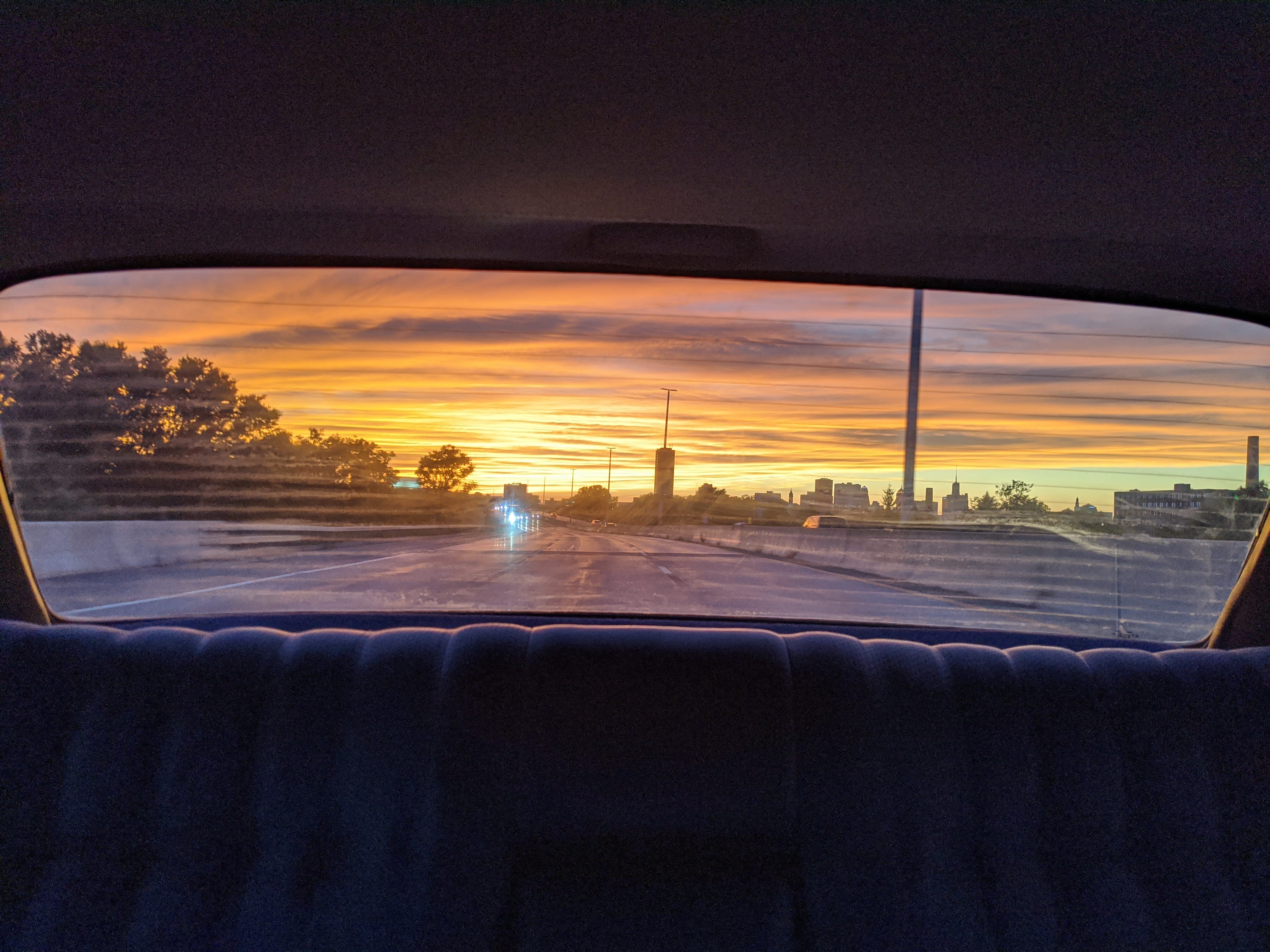
From the east window, you can see the cherry tops of downtown cut flat against the sky, trees like dripping paintbrushes breaking up the blue, the fresh slices of park, the neon blue News sign. It all swirls together to the edge of town where everything stops, becomes suddenly, oddly empty. It’s as though god ran out of acrylic. Drive a little further, and you’ll realize you’re on an island in the middle of the Great American Sea, baby, woo! Maybe that’s why it feels so isolated, so utterly strange and skeptical. You’ve been living in a haunted lighthouse.
Or maybe that’s COVID. Maybe that’s me. Buffalo has a hard time letting you in and letting you go. We are the same in this way.
I lived here for a year. One year.
Betty grew up here, and it showed in everything that she was: Friendly, sharp in that distinctly eastern way, wheels always spinning, hands always reaching, eyes open, gray clouds full of ice, pockets full of leaves, a laugh, wind whisking through the maple tree, a hat blowing down the breezeway, chartreuse shadows cast over a blue eye, my friend sleeping in the lamplight, an owl leaving his feather behind.
I don’t know if I’ll ever be back, but it was home for a while. For a while, she was everything.
This is some emotionally gutting writing with such a bitter sweetness in its ending. I love the way you looked at working in a nursing home. My great aunt lived to 100 and passed away in a home last year. Her last years were filled with learning Spanish, painting, poetry and wearing a tiara for her birthday each year. It was people like you who made me feel that she was truly loved and cared for in her last years. So thank you on behalf of all the lives you made better without realising it
Absolutely gutted to hear about Harriet :(
I'm glad you got to share some time on earth with her, and especially with Betty